


Short overview
Hyundai has officially launched the 2026 Bayon in India at a starting price of ₹9.99 lakh (ex-showroom). The new design of the crossover, the modern technology and the advanced safety features bring a fresh look to Hyundai’s SUV lineup. The new Bayon is positioned between the Hyundai Venue and Creta and is aimed at buyers looking for a stylish and feature-loaded vehicle for their daily commute and family outings. It comes with a 1.5-litre petrol engine with manual and automatic transmission options, dual 12.3-inch displays, Level 2 ADAS and a claimed 505-litre boot space. Here’s what buyers need to know about its price, features, specifications and value for money.
2026 Hyundai Bayon launch and price in India
Buyers continue to be drawn to the Indian SUV market for its mix of attractive styling, comfortable interiors, practical space and modern technology. Now Hyundai has given these buyers another choice with the arrival of the 2026 Hyundai Bayon.
Launched on 26 October 2026, the Hyundai Bayon price starts at ₹9.99 lakh (ex-showroom). The company slots it between the Venue and the Creta, giving shoppers another choice when shopping for a compact or mid-size SUV. The Bayon is for those who want more than just basic transportation but don’t want to jump straight to a more expensive SUV.
With its unique exterior styling, tech-centric cabin, petrol engine and advanced driver assistance features, it’s an interesting addition to Hyundai’s Indian lineup.
The starting price is just one part of the story. Buyers should also check out the variants on offer, transmission options, equipment and on-road price before deciding if this SUV fits their budget.
Hyundai Bayon price and variants
The 2026 Hyundai Bayon is available in seven variants: HX2, HX3, HX3 Plus, HX5, HX6, HX8 and HX10. Buyers can choose between manual and automatic transmission options on selected variants.
According to CarDekho’s launch report, the ex-showroom price range extends from approximately ₹10 lakh to ₹18 lakh, depending on the variant and transmission.
| Hyundai Bayon variant | Petrol manual | Petrol automatic | |
| HX2 | ₹9.99 lakh | Not available | |
| HX3 | ₹10.90 lakh | Not available | |
| HX3 Plus | ₹11.80 lakh | Not available | |
| HX5 | ₹12.45 lakh | ₹13.85 lakh | |
| HX6 | ₹13.57 lakh | ₹14.97 lakh | |
| HX8 | ₹15.10 lakh | ₹16.54 lakh | |
| HX10 | ₹16.65 lakh | ₹18.00 lakh |
The prices quoted are ex-show room prices. Please check with an authorized Hyundai dealer for the latest variant-wise prices and availability before booking.
Bookings have commenced on the official website and authorized dealerships of Hyundai with a minimum booking amount of ₹11,000. The final on-road price will vary as per city, registration charges, insurance and other applicable charges.
The base-level model could appeal to buyers who are on a tight budget. However, those looking for premium features like a panoramic sunroof, ventilated seats, a premium sound system or automatic transmission should check the equipment list on the higher variants before finalizing.
Exterior design: A different approach to SUV styling
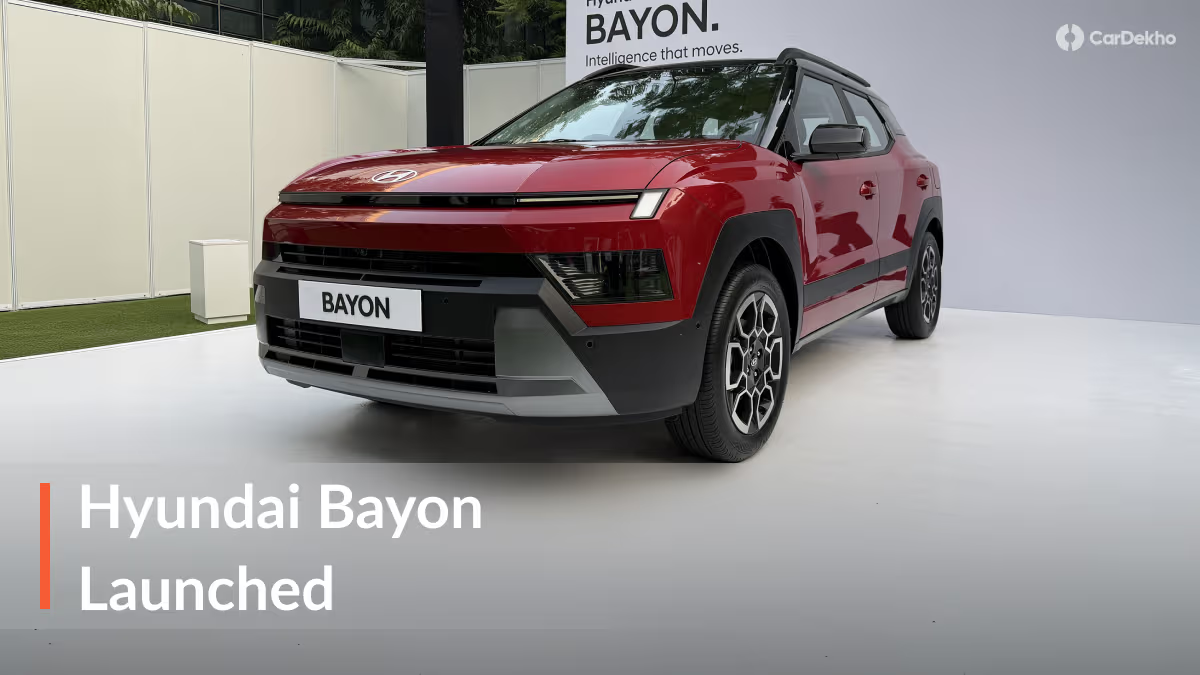
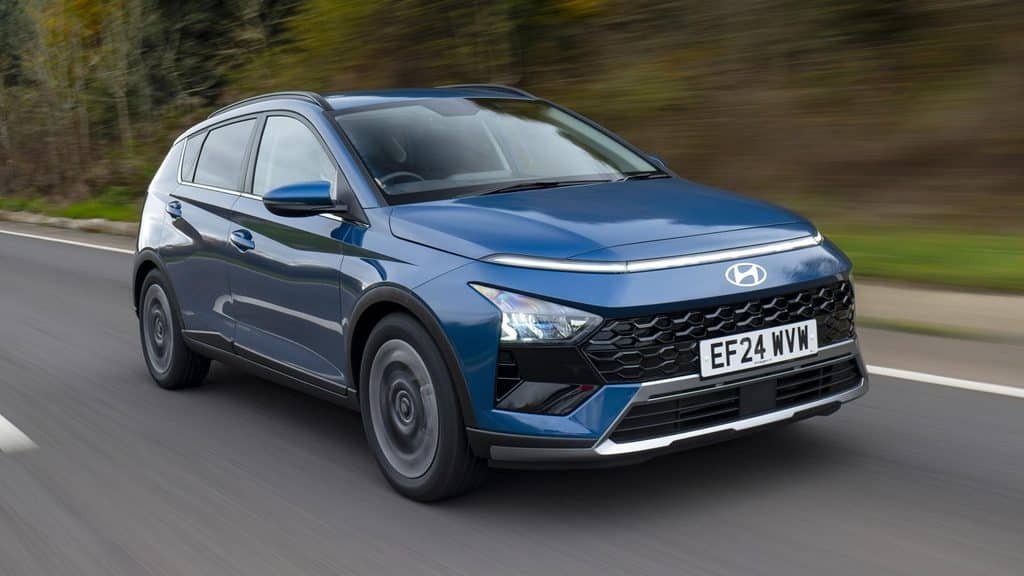
One of the big talking points about the new Hyundai Bayon is its quirky exterior design. Hyundai has opted for a distinctive crossover-inspired look instead of the standard SUV appearance.
Front of the car features slim LED daytime running lights, headlamps lower on the bumper and a sculpted bonnet. Overall the look is a modern one, giving the vehicle a recognizable road presence.
Viewed from the side, the sporty impression is emphasized by geometric wheel arches, protective body cladding, roof rails and distinctive alloy-wheel designs. The rear continues the styling theme with prominent LED tail lamps and sculpted bumper.
The Bayon is available in colors like Atlas White, Titanium Black, Fiery Red, Classy Blue, Golden Bronze and Ecotronic Gray. Also selected colors are offered in dual-tone or matte finishes.
The design is likely to appeal to younger buyers and families seeking a break from the SUV shapes that dominate Indian roadways.
But styling is a matter of taste. Buyers should see the car in person and take it for a test drive instead of choosing it based on photographs alone.
INTERIOR, COMFORT AND TECH
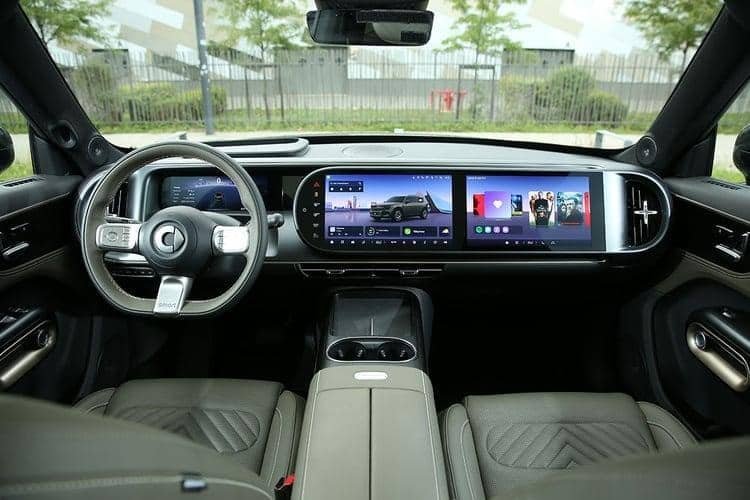
Another major highlight of the 2026 Hyundai Bayon is the cabin. Hyundai has focused on creating a modern driving environment through digital displays, connected features and everyday convenience.
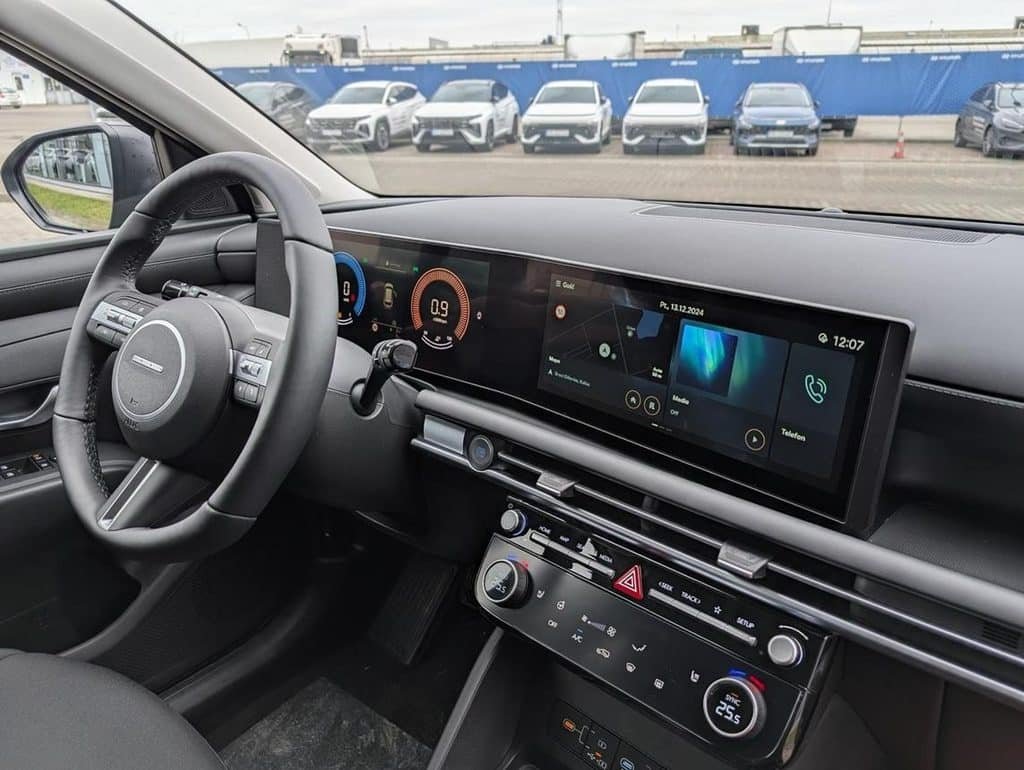
The dashboard features two 12.3-inch screens; one is for the driver’s instruments and the other for the infotainment system. Occupants can connect their smartphones without the hassle of cables thanks to wireless Android Auto and Apple CarPlay.
The Bayon also comes with an in-built generative AI voice assistant that offers more natural interactions. Depending on the service and connectivity available, it can provide users with information on travel, weather, restaurants and other everyday subjects.
Other technology highlights are Hyundai Bluelink connected-car features, over-the-air software update capability, and voice command functionality.
Some versions include comfort features like ventilated front seats, an electric driver’s seat, automatic climate control, rear AC vents, a panoramic sunroof, wireless phone charging and a premium Bose sound system.
These features can make your daily commute more pleasant, especially if you spend a lot of time driving in busy cities.
Individual features may not be available on all variants. Check the exact equipment list before paying for a higher trim level.
Engine, performance and mileage
The Hyundai Bayon uses a 1.5-litre naturally aspirated petrol engine that produces approximately 115 PS of maximum power and 144 Nm of torque. Buyers can select a six-speed manual gearbox or Hyundai’s Intelligent Variable Transmission, known as iVT.
| Specification | Hyundai Bayon |
| Engine | 1.5-litre naturally aspirated petrol |
| Maximum power | 115 PS |
| Maximum torque | Approximately 144 Nm |
| Manual gearbox | 6-speed |
| Automatic gearbox | iVT |
| Drivetrain | Front-wheel drive |
| Claimed automatic fuel efficiency | 18.6 km/l, as reported by CarDekho |
The naturally aspirated engine is designed for smooth, predictable performance for everyday driving. This might be a good fit for commuters who deal with city traffic on a regular basis, and take the occasional long highway trip.
The manual gearbox in particular will please drivers who like to have a bit more control over the changing of gears. The automatic iVT option might be more convenient for people who regularly deal with stop-and-go traffic.
The automatic version also benefits from driving technologies like Dash Boost Mode and Sporty Drive Tech, designed to enhance responsiveness when conditions are right.
Fuel efficiency is a key consideration for Indian buyers. The automatic version is claimed to return 18.6km/l by CarDekho, but real-world mileage will depend on traffic, road conditions, driving style, air-conditioning use and vehicle load. Buyers should check the officially stated fuel-efficiency figure before buying.
Hyundai has also announced plans for a factory-fitted CNG option for January 2027. The CNG version is not on sale yet and buyers looking for lower running costs should wait for confirmed pricing, availability and specifications.
Safety features: Driver Assistance and ADAS
Safety is one of the Bayon’s major selling points. According to Hyundai, the car is built on its Global K Enhanced Platform and has been developed to get five-star safety ratings in India. Again, this is a manufacturer engineering claim, not the same as an independently awarded crash-test rating.
The SUV features six airbags, Electronic Stability Control, Hill-start Assist and a Tyre-pressure Monitoring System. These features can assist in giving you extra protection and confidence while driving.
Higher variants come with Hyundai SmartSense Level 2 Pro ADAS with 23 driver assistance features, according to the manufacturer. Other equipment reported includes surround-view monitor, blind-spot view monitor, highway driving assistance and navigation-based adaptive cruise-control functions.
Such technologies can help drivers to see what’s going on around them and react to particular situations on the road. ADAS is not a replacement for attentive driving and is subject to limitations based on road markings, visibility, traffic and system limitations.
Buyers should also check the exact safety features on offer in their variant of choice. The top model may have a feature that the entry-level version doesn’t.
At the time of launch reporting, buyers should not assume that a five-star independent Bharat NCAP result has already been awarded. Before accepting a safety rating as confirmed, check the latest official crash-test results.
Dimensions and boot space
The Hyundai Bayon is designed to balance cabin space with manageable dimensions for everyday driving.
| Dimension | Hyundai Bayon |
| Length | 4,245 mm |
| Width | 1,810 mm |
| Height, including roof rails | 1,605 mm |
| Wheelbase | 2,600 mm |
| Ground clearance | 205 mm |
| Boot capacity | 505 litres |
The 505-litre boot is a practical advantage for families with regular shopping bags, luggage or travel essentials to transport. The split-folding 60:40 rear seats also let owners configure the cabin to suit different passenger and luggage requirements.
With a ground clearance of 205 mm, it should help in tackling some bad roads and speed breakers, but one will have to be careful on rough roads.
The wheelbase and overall dimensions suggest the Bayon will provide useful interior space without being too unwieldy in urban environments. Still, a test drive is the best way to judge rear-seat comfort, visibility and parking ease.
Hyundai Bayon vs Venue vs Creta;
Hyundai already has a strong footprint in the SUV segment with Venue and Creta. The Bayon gives shoppers another option to consider when shopping these vehicles.
For customers looking for a smaller SUV for commuting in the city, the Venue is a worthy consideration. Drivers who frequently find themselves parking in tight spaces may appreciate its compact size.
Sitting between the two models is the Bayon, which blends a unique crossover design with a 1.5-litre petrol engine, a tech-packed cabin and a generous boot. It could appeal to buyers looking for a combination of daily usability and luxury features.
Meanwhile, the Creta remains a key alternative for those who prefer its legacy in the mid-size SUV segment. The Bayon is newer, but customers should not assume it is better and instead compare the price, equipment and comfort of equivalent variants.
Right to purchase
Model to think about
Urban compact SUV
Hyundai Venue (1)
Unique styling and technology
Hyundai Bayon:
Established midsize SUV alternative
Hyundai Creta
The right choice is based on budget, family needs, driving conditions and the features most important to the buyer. The Bayon’s final value proposition also will depend on how its equipment measures up against similarly priced versions of rival SUVs.
Who should be looking at the Hyundai Bayon?
A modern petrol SUV with a distinctive look, plenty of boot space and a feature-packed interior, the new Hyundai Bayon should appeal to just about anyone. It offers more space and the sort of convenience equipment some families moving up from a hatchback or smaller car will find appealing.
For city driving, the iVT variant comes with an automatic transmission while those who prefer to change gears manually can opt for it in selected variants.
Tech-savvy shoppers will also love the dual displays, connected-car services and available ADAS features. But those looking for diesel power, an on-today confirmed CNG option or an independently verified crash-test rating should examine their options and the latest official information.
Before booking, check the on-road price, service costs, insurance, warranty terms and variant specific features. A test drive with family members will help you assess if the cabin, rear seats and driving position are suitable for daily use.
Advantages and disadvantages
The key strengths of the Bayon are its unique crossover styling, 115 PS petrol engine, manual and automatic options, 505-litre boot and extensive technology offering on select variants. It may also appeal to buyers looking for more help behind the wheel with its driver assistance features.
There are also a few things to keep in mind. The base price doesn’t include the cost of every feature you might want, and the higher trims can cost considerably more. Claimed mileage is not the same as real mileage and the eccentric design is not everyone’s cup of tea.
Customers should also confirm that the safety equipment they want is available on the trim they select and that the advertized CNG option is available when they are ready to buy.
“Don’t be caught up in the buzz of a new launch, the decision needs to be well informed and based on total ownership cost and practical requirements.
Final thoughts: Should you consider the 2026 Hyundai Bayon?
2026 Hyundai Bayon – New Option in India’s Competitive SUV Market It has a lot of attractive factors such as a starting price of ₹9.99 lakh, a unique exterior, a contemporary digital cabin, a 1.5-litre petrol engine and a lot of safety tech.
Its 505-litre boot and optional automatic transmission could make it a practical choice for families and urban drivers who also enjoy the odd highway jaunt. Sitting between the Venue and the Creta, it gives buyers another option to consider when they are moving up from a smaller car.
But the best version will depend on your own priorities. Those on a budget should pay close attention to the base model, while those wanting top-shelf equipment should compare the higher trims to competing SUVs at similar on-road prices.
Overall, the Hyundai Bayon should be on the radar of buyers looking for a modern, tech-forward petrol SUV in India. A visit to the dealership, a test drive and a careful comparison of variant prices will help decide if it strikes the right balance of comfort, features and value for money.
For the latest specifications, bookings and official announcements, visit Hyundai India’s official website.